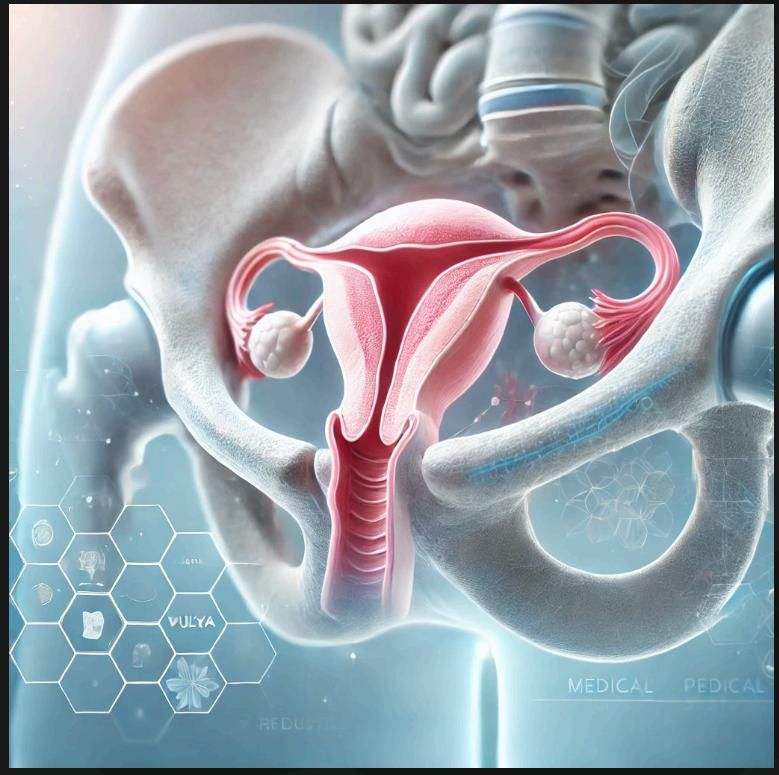
Bleeding Menstrual: What is Normal and What is Abnormal
Menstrual bleeding, or menstruation, is a complex physiological process that involves the shedding of the endometrial lining of the uterus. This guide, formulated with insights from Dr. Hema Jonnalagadda, aims to provide an exhaustive, scientifically detailed overview of normal and abnormal menstrual bleeding. This resource will address every aspect of menstrual health, offering comprehensive knowledge to clarify all potential queries.
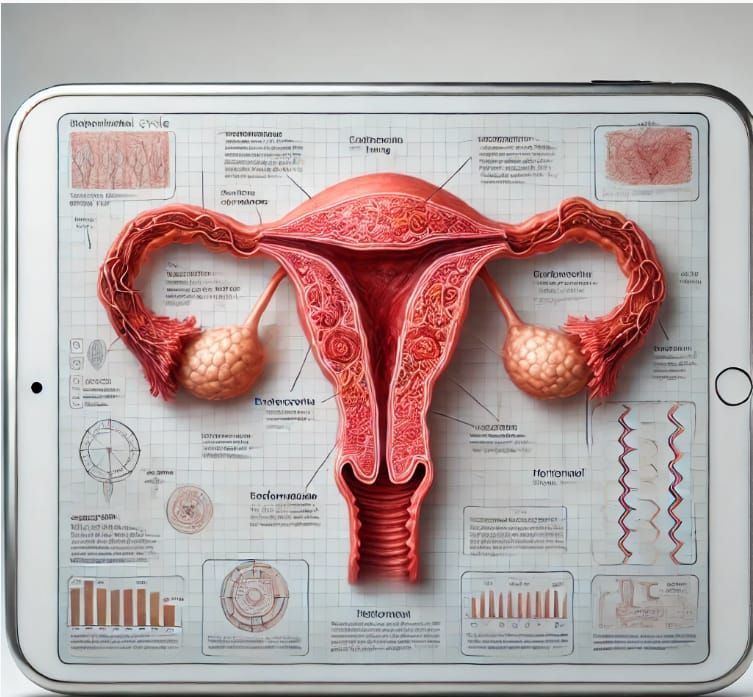
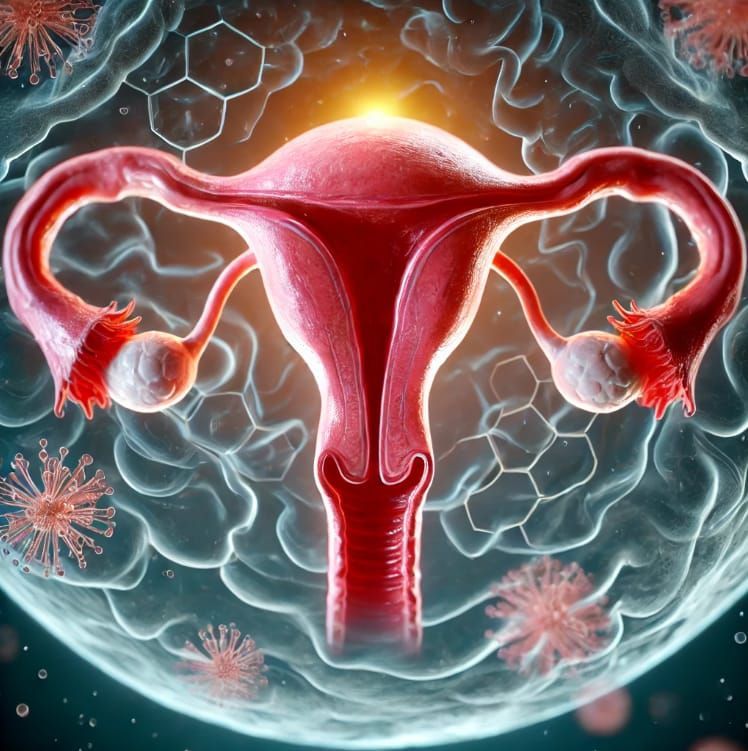
Menstrual Cycle Phases: A Detailed Breakdown with Simplified Clarifications
The menstrual cycle is regulated by a finely tuned interplay of hormones. It is typically divided into four phases:
Menstrual Phase (Days 1-5)
● Pathophysiology: Shedding of the functional layer of the endometrium due to the drop in progesterone levels.
- Simplified Clarification: The uterine lining breaks down and is expelled as menstrual blood due to lower hormone levels.
● Normal Findings: Bleeding lasting 3-7 days with a total blood loss of 30-80 milliliters.
- Simplified Clarification: Menstruation typically lasts 3-7 days, with an average blood loss of 2-6 tablespoons.
Follicular Phase (Days 1-13)
● Endocrine Regulation: Increased secretion of Follicle Stimulating Hormone (FSH) from the anterior pituitary stimulates follicular growth.
- Simplified Clarification: The brain signals the ovaries to start maturing eggs.
● Endometrial Changes: Proliferation of the endometrium due to rising estrogen levels.
- Simplified Clarification: The uterine lining thickens and rebuilds.
Ovulation (Day 14)
● Hormonal Surge: A peak in Luteinizing Hormone (LH) triggers the release of a mature oocyte.
- Simplified Clarification: A spike in a specific hormone causes an egg to be released from the ovary.
● Clinical Significance: Mid-cycle pain (Mittelschmerz) may be observed, and cervical mucus becomes more elastic and clear, facilitating sperm entry.
- Simplified Clarification: Some women feel slight pain during ovulation, and cervical mucus changes to help sperm reach the egg.
Luteal Phase (Days 15-28)
● Hormonal Influence: The corpus luteum secretes progesterone, stabilizing the endometrial lining for potential implantation.
- Simplified Clarification: The body produces a hormone to keep the uterine lining ready for a potential pregnancy.
● Endometrial Maturation: Glandular secretion and increased vascularization of the endometrium.
- Simplified Clarification: The uterine lining becomes nutrient-rich and full of blood vessels to support a possible pregnancy.
Normal Menstrual Bleeding: Clinical and Pathological Insights
Duration and Volume:
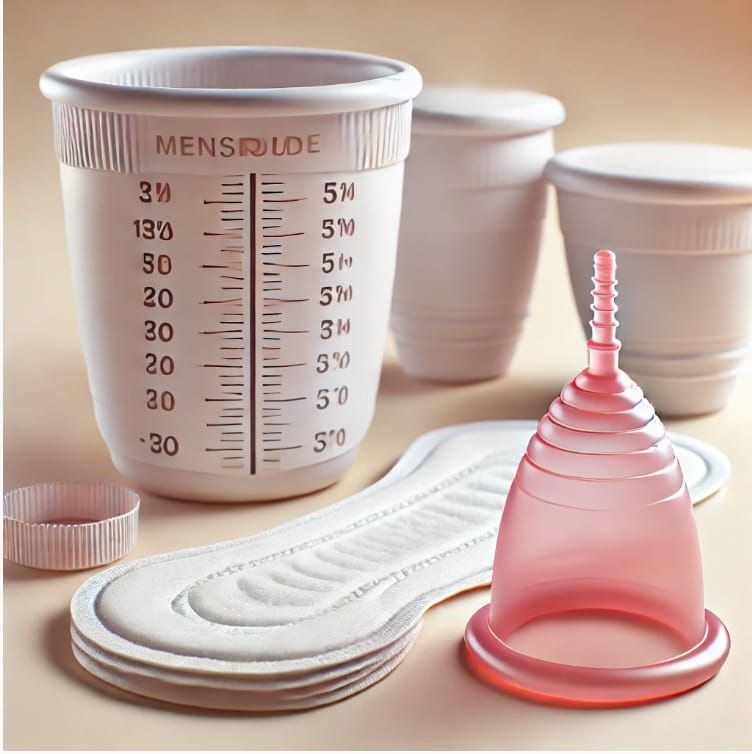
● Clinical Norms: Menstrual bleeding lasting between 3-7 days, with an average blood loss of 30-80 milliliters.
● Measurement Techniques: The use of menstrual cups or calibrated sanitary products can aid in quantifying blood loss.
Color and Consistency:
● Hemoglobin Breakdown: Initial bright red bleeding progressing to darker red or brown due to oxidation.
● Clot Formation: Small clots are normal; large clots may indicate excessive bleeding or an underlying coagulopathy.
Cycle Regularity:
● Eumenorrhea: Regular cycles ranging from 21 to 35 days.
● Variations: Minor deviations are normal but should be monitored if consistent irregularities occur.
Abnormal Menstrual Bleeding (AUB): Etiologies and Diagnostics
Abnormal uterine bleeding (AUB) can be a symptom of various underlying pathologies. The International Federation of Gynecology and Obstetrics (FIGO) classifies AUB into structural and non-structural causes using the PALM-COEIN system:
Structural Causes (PALM)
- Polyp : Endometrial or cervical polyps causing irregular bleeding.
- Simplified Clarification : Non-cancerous growths in the uterus or cervix that can cause unusual bleeding.
- Adenomyosis : Invasion of endometrial tissue into the myometrium, resulting in heavy, painful periods.
- Simplified Clarification : When the lining of the uterus grows into the muscle wall, causing heavy and painful periods.
- Leiomyoma (Fibroids) : Benign uterine tumors causing menorrhagia and pressure symptoms.
- Simplified Clarification : Non-cancerous tumors in the uterus that cause heavy bleeding and a feeling of pressure.
- Malignancy and Hyperplasia : Endometrial hyperplasia and cancer presenting with postmenopausal bleeding or irregular heavy bleeding.
- Simplified Clarification : Thickening of the uterine lining or cancer, which can cause unusual heavy bleeding, especially after menopause.
Non-Structural Causes (COEIN)
- Coagulopathy : Conditions such as von Willebrand disease leading to excessive bleeding.
- Simplified Clarification : Blood clotting disorders that cause too much bleeding.
- Ovulatory Dysfunction: Irregular ovulation causing unpredictable bleeding patterns.
- Simplified Clarification : Irregular ovulation leading to unpredictable menstrual cycles.
- Endometrial : Primary endometrial dysfunction without a definable structural cause.
- Simplified Clarification : Issues with the uterine lining that aren't caused by growths or other structural problems.
- Iatrogenic : Medications or devices (e.g., IUDs) leading to abnormal bleeding.
- Simplified Clarification : Certain medications or medical devices can cause unusual bleeding.
- Not Yet Classified : Cases where the etiology remains unclear.
- Simplified Clarification : Causes of abnormal bleeding that haven't been identified yet.
Heavy Menstrual Bleeding (Menorrhagia)
● Pathophysiology: Often due to uterine fibroids, adenomyosis, or coagulopathies.
● Clinical Assessment: Laboratory evaluation (CBC, coagulation profile), imaging (ultrasound, MRI), and endometrial biopsy as needed.
Intermenstrual Bleeding
● Etiologies: Can result from hormonal contraception, infections, or structural abnormalities.
● Diagnostics: Pap smear, pelvic ultrasound, and hysteroscopy.
Postmenopausal Bleeding
● Red Flags: Requires immediate investigation to rule out endometrial carcinoma.
● Investigative Protocols: Transvaginal ultrasound and endometrial biopsy.
Light Menstrual Bleeding (Hypomenorrhea)
● Causes: Hormonal contraception, chronic medical conditions, or Asherman’s syndrome.
● Management: Hormonal assessment, hysteroscopy for intrauterine adhesions.
Infrequent Menstrual Bleeding (Oligomenorrhea)
● Common Causes: PCOS, thyroid dysfunction, hyperprolactinemia.
● Evaluation: Hormonal profile, pelvic ultrasound, and MRI of the pituitary gland if necessary.
Frequent Menstrual Bleeding (Polymenorrhea)
● Considerations: Hormonal imbalances, endometrial pathology.
● Assessment: Endocrine evaluation, endometrial sampling.
Painful Menstrual Bleeding (Dysmenorrhea)
● Primary: Excessive prostaglandin production leading to uterine contractions.
● Secondary: Endometriosis, fibroids, or pelvic inflammatory disease (PID).
● Management: NSAIDs, hormonal treatments, laparoscopic evaluation for endometriosis.
Diagnostic and Therapeutic Approaches
Diagnostic Tools
● Transvaginal Ultrasound: Gold standard for evaluating endometrial and myometrial pathology.
● Saline Infusion Sonography (SIS): Enhances the evaluation of intrauterine pathology.
● MRI: Detailed imaging for complex cases, especially adenomyosis or deep infiltrating endometriosis.
● Hysteroscopy: Direct visualization and biopsy of intrauterine lesions.
● Endometrial Biopsy: Essential for ruling out hyperplasia or malignancy.
Treatment Modalities
● Medical Management:
- Hormonal Therapy: Combined oral contraceptives, progestins, GnRH analogs.
- Non-Hormonal: NSAIDs, antifibrinolytics like tranexamic acid.
● Surgical Interventions:
- Dilation and Curettage (D&C): For diagnostic and therapeutic purposes.
- Endometrial Ablation: Minimally invasive treatment for menorrhagia.
- Myomectomy: Removal of fibroids preserving the uterus.
- Hysterectomy: Definitive treatment for refractory AUB, especially in the context of malignancy.
Lifestyle and Supportive Measures
● Dietary Modifications: Iron-rich diet to combat anemia, balanced nutrition to maintain hormonal balance.
● Exercise: Regular physical activity to manage weight and reduce stress.
● Stress Management: Techniques like mindfulness, yoga, and counseling.

Conclusion
A thorough understanding of normal and abnormal menstrual bleeding patterns is vital for early detection and management of underlying gynecological disorders. This comprehensive guide serves as an exhaustive resource to demystify menstrual health, providing detailed scientific insights and practical approaches to managing various menstrual disorders.
Advocare Montgomery Gynecology, located in Plymouth Meeting, offers comprehensive care for women's health needs. Many procedures for diagnosing and treating menstrual disorders can be conveniently performed in-office, while others may require specialized referrals. Selecting the right practitioner at the right time is crucial for effective treatment. At Advocare Montgomery Gynecology, Dr. Hema Jonnalagadda and her experienced team are dedicated to offering expert, compassionate care tailored to your individual needs.
For personalized medical advice and treatment, consult with Dr. Hema Jonnalagadda and the team at Advocare Montgomery Gynecology. We have the expertise and resources to help you manage your menstrual health with confidence and ease.
For further information or to schedule an appointment, please visit our [website](https://www.advocaremontgomerygyn.com/).
Choose Advocare Montgomery Gynecology for exceptional care and support on your journey to optimal gynecological health.
What endometriosis actually is
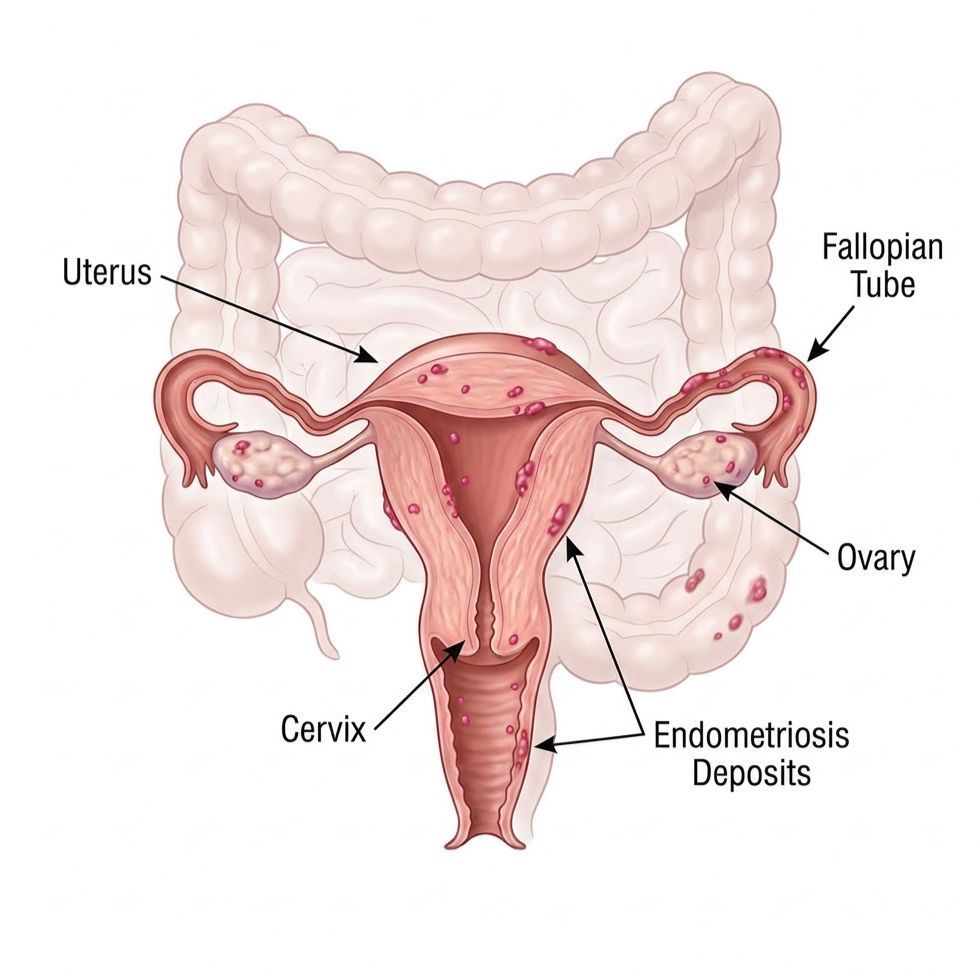
Endometriosis is a condition in which tissue similar to the lining of the uterus grows outside the uterus. As the WHO describes it, this tissue causes inflammation and scar tissue, most often in the pelvis, and sometimes elsewhere in the body. It affects an estimated 10% of reproductive-age women worldwide, about 190 million people. It is a chronic disease, and there is currently no cure, though symptoms can be managed well with the right care.
Common symptoms
Pain severe enough to interfere with school, work, or daily life is not something to push through quietly. Common symptoms include:
- Painful periods (dysmenorrhea)
- Pain during intercourse (dyspareunia)
- Pain during bowel movements or urination
- Heavy menstrual bleeding
- Chronic pelvic pain that continues after your period ends
- Bloating, nausea, or fatigue
- Difficulty getting pregnant alongside any of the above
Why diagnosis took so long, and why that is changing
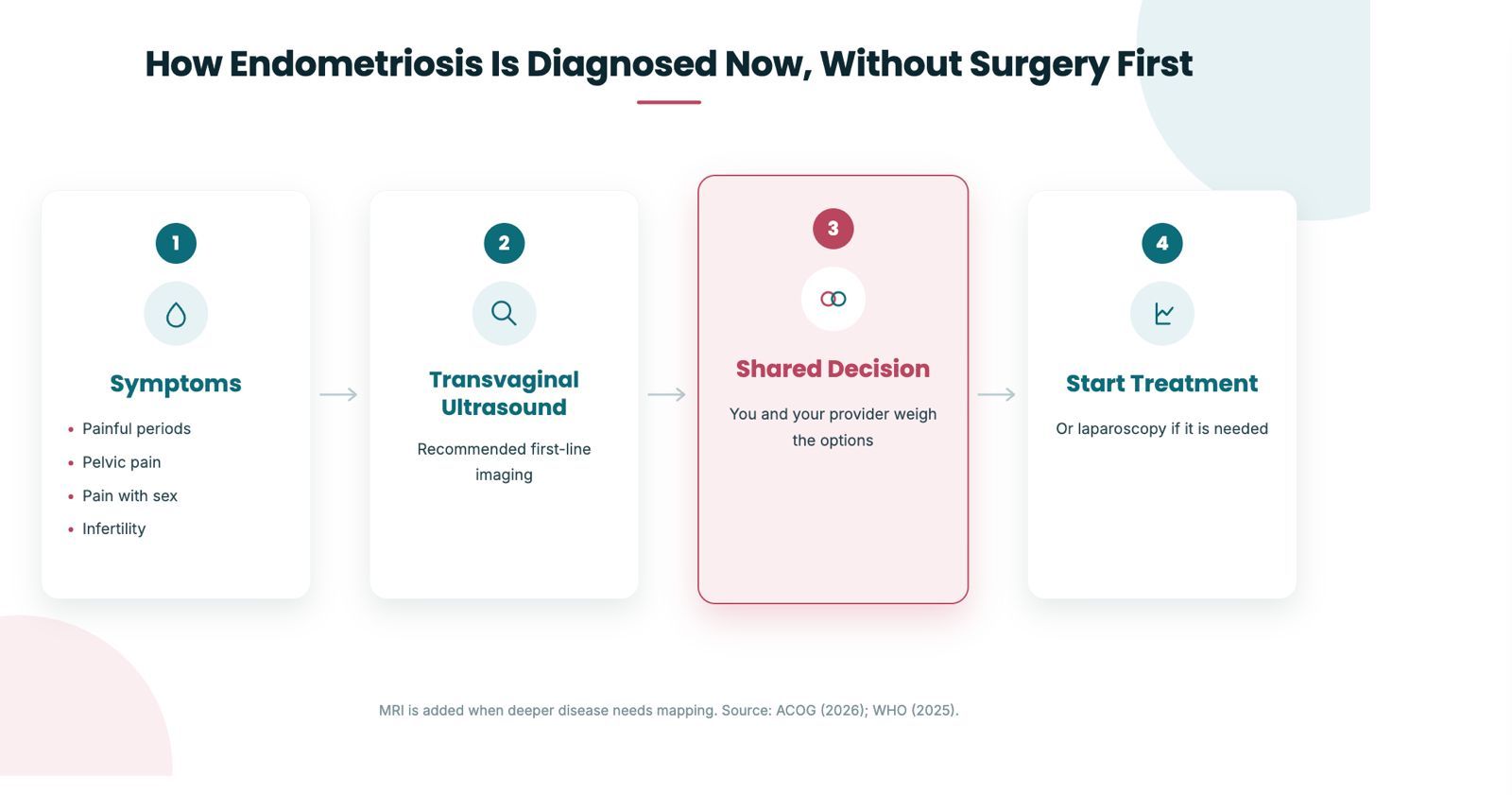
The old model treated laparoscopy as the only way to be sure. Because surgery carries risk, cost, and access barriers, many women waited years while their pain was normalized. The WHO puts the average time for diagnosis at 4 to 12 years. ACOG's clinical practice guideline shifts the entry point: clinicians should suspect endometriosis from symptoms, and can start treatment after a clinical diagnosis, rather than requiring surgery first. The WHO now agrees that a clinical diagnosis may be made from symptoms and imaging, and that surgery is not necessarily required before starting treatment.
What does NOT diagnose endometriosis
There is currently no blood test to diagnose endometriosis. ACOG strongly recommends against using blood, urine, or other biomarker tests to diagnose the condition, because none of them are as accurate as symptom-based assessment, imaging, or surgical confirmation. If you see a direct-to-consumer test marketed as a way to confirm endometriosis from a blood or saliva sample, current guidance does not support it as a diagnostic tool.
01
When is surgery actually needed?
Surgery is no longer required simply to diagnose endometriosis. Under the latest ACOG guidance, it is reserved for specific situations:
- Severe, uncontrolled symptoms that do not respond to medication
- Deep infiltrating endometriosis lesions
- Ovarian endometriosis (endometriomas, sometimes called chocolate cysts)
- Fertility-related indications, such as blocked fallopian tubes before IVF
02
How endometriosis is treated
Treatment is individualized. It depends on symptom severity, your preferences, side effects, and whether you are trying to become pregnant. Based on WHO and ACOG guidance, the main options are:
- Pain relief: non-steroidal anti-inflammatory drugs such as ibuprofen or naproxen
- Hormonal therapy: combined hormonal contraceptives, progestins (including the hormonal IUD), or GnRH analogues
- Surgery: minimally invasive removal of lesions, adhesions, and scar tissue when medication is not enough
- Fertility care: ovulation induction, intrauterine insemination, or IVF for those trying to conceive
- Whole-person support: physiotherapy and cognitive behavioral therapy can help reduce pain and improve quality of life
03
Where surgery still fits
The new guidance does not mean surgery disappears. It means surgery is no longer the price of admission for being believed. When surgery is the right step, it can often be done through minimally invasive techniques, including daVinci robotic gynecologic surgery, which is designed for precision and shorter recovery. The point is sequencing: you should not have to wait for an operation to start feeling better.
04
The honest limits.
A clinical diagnosis from symptoms and imaging is not as accurate as visual confirmation at laparoscopy, so some uncertainty can remain. Ultrasound can miss superficial disease, which is why a normal scan does not fully rule endometriosis out. There is no cure, and symptoms can recur even after successful treatment. None of this is a reason to wait years for care. It is a reason to start the conversation now.
Getting evaluated in Plymouth Meeting
Evaluation can begin with your history and an in-office pelvic ultrasound, using wireless ultrasound technology at the point of care. Dr. Hema Jonnalagadda, a Fellow of the American College of Obstetricians and Gynecologists, builds a plan around your symptoms and your goals, whether that is pain relief, fertility, or both. You do not have to prove your pain through surgery to be taken seriously.
Frequently asked questions
About the author & sources
Dr. Hema Jonnalagadda, MD, FACOG, is the founding physician of Advocare Montgomery Gynecology in Plymouth Meeting, PA, and a Member of The Menopause Society. She provides evidence-based women's health care from adolescence through menopause.
This article is for general education and is not a substitute for individual medical advice. If you are in severe pain or have new or concerning symptoms, please consult your provider.
Sources (primary)
- World Health Organization. Endometriosis fact sheet (updated October 15, 2025). https://www.who.int/news-room/fact-sheets/detail/endometriosis
- American College of Obstetricians and Gynecologists. Clinical Practice Guideline on evaluation and diagnosis of endometriosis, Obstetrics & Gynecology (2026). https://www.acog.org
- World Health Organization. Infertility fact sheet (2025). https://www.who.int/news-room/fact-sheets/detail/infertility